
THANK YOU FOR SUBSCRIBING
× 
Construction Tech Review Weekly Brief
Be first to read the latest tech news, Industry Leader's Insights, and CIO interviews of medium and large enterprises exclusively from Construction Tech Review

Major Projects
Sevak Demirjdjian, Vice President
Accelerated Bridge Construction Techniques Using Pre-Fabricated And Pre-Assembled Structural Systems
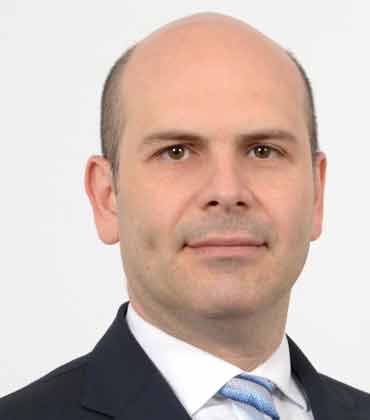
Sevak Demirjdjian
Rationale for Implementing ABC Techniques for a Sustainable Bridge Construction
ABC Techniques have been used by SNC-Lavalin engineers throughout the years to ensure world-class bridge construction. Accelerated techniques for bridge construction should be used where the benefits have effects on the construction costs. This modern technology was used to implement innovative planning, design, materials, and construction methods in a safe and costeffective manner to reduce on-site construction. Decisions to use accelerated bridge construction techniques are made after considering the specific factors, mainly temporary roadways, temporary retaining structures, environmental impacts, sustainable development, user costs, social and financial prerogatives, long detours, and means and methods. The author has selected in this article, several structures where innovation and sustainability are paramount. Two major project applications are presented. The first consists of a new construction for two projects: an elevated roundabout and the new Champlain Bridge. The second describes the reconstruction of a footbridge and the replacement of bridge decks through different structural techniques.
Construction of an Elevated Roundabout
This is a complex geometry project located in a highly urbanized area. The project includes the relocation of public utilities, demolition of existing structures, construction of new structures and new roadways, and preparation of temporary roads and alternate itineraries for highway traffic, public transport, and pedestrian traffic. The elevated structure was constructed over a major highway in phases to maintain traffic flow.
Construction of a Footbridge
The construction entails the replacement of an existing footbridge. The ABC technique was implemented, which comprises HPC precast pre-stressed elements offering the most economical solution. The bridge spans 35m. The crosssection consists of two Z-shaped pre-cast girders with the shape providing a bottom ledge for supporting the pre-cast panels for the deck slab.
 Reconstruction of the Jacqus-Cartier Bridge Deck Replacement–Integral Deck Floating System
Measuring 2.70 km span crossing a major river, with five lanes of traffic, this bridge carries more than 43 million vehicles every year, making it one of the busiest bridges in North America on a per lane basis. The ABC Technique for deck replacement was developed based on the following main objectives:
Minimize inconveniences to as many users as possible
Construct a highly durable deck (design service life greater than 50 years)
Minimize negative impacts on the environment
Reconstruction Of Princess Margaret Bridge–Intergral Deck, Composite Action
The Princess Margaret Bridge provides an elevated crossing over a major river, measuring 1097 m in overall length. It is a high-level structure supported on tall, slender piers to provide the required 23± m clearance for the center navigation span. The roadway is supported by nine deck truss spans, one through-truss navigation span, seven Plate Girder spans, and six Rolled Beam approach spans.
A composite section was created between the deck slab and the steel members. This composite action tremendously improved the capacity of those members and therefore reduced the need for strengthening.
Composite actions were created between the deck panels and top chord steel truss. The composite actions to the steel members were achieved through a spine beam that was detailed to connect either the Plate Girder top flange or the Deck Truss top chord to the deck panels after the post-tensioning operations.
The articles from these contributors are based on their personal expertise and viewpoints, and do not necessarily reflect the opinions of their employers or affiliated organizations.
Top
