
THANK YOU FOR SUBSCRIBING
× 
Construction Tech Review Weekly Brief
Be first to read the latest tech news, Industry Leader's Insights, and CIO interviews of medium and large enterprises exclusively from Construction Tech Review

Glenwood
Michael J. Palumbo, Senior Vice President, Construction
Designing World-Class Buildings with Preconstruction Expertise
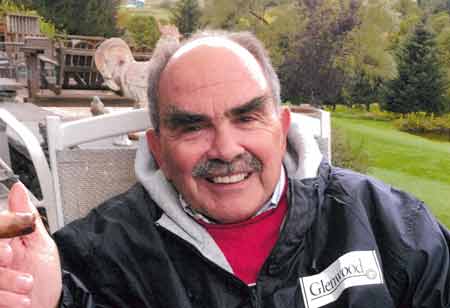
Michael J. Palumbo
I could write a book about the specific experiences I have gained in 60 years of New York City construction.
First, I should thank the numerous world-class executives and principals who gave me opportunities and progressively greater responsibility, allowing me to grow from a concrete inspector into a Senior Vice President. From 1966 to the present, every job I have held has brought new experiences and lessons that have shaped the way I approach construction.
My educational background at Brooklyn Technical High School and City College of New York (CCNY) was an absolute gift. New York engineers used to call CCNY the Harvard of Civil Engineering, and I was fortunate to receive that education while working in the city at a remarkable time for construction.
New York was full of reinforced-concrete high-rise construction. It seemed as though a new building was going up on every corner, and I had the opportunity to learn the industry from the ground up.
My first day as a concrete inspector was at a Colonial Concrete plant in Coney Island, Brooklyn. It was an ancient plant with large hoppers and counterweights. After adjustments were made for moisture content and sieve size, the weight of the sand, stone and cement actually registered on a mechanical scale.
My career took off from there.
Learning Construction from the Ground Up
While working on a job site, I met a structural engineer who asked me if I could read plans.
The next thing I knew, I was working as a reinforced-steel inspector on some of New York City's most iconic high-rise concrete structures between 1970 and 1975.
That engineer, Sid Dein, had a tremendous influence on my career. He was responsible for encouraging me to graduate from CCNY at night with a Bachelor of Civil Engineering. More importantly, he taught me something that has stayed with me throughout my career: how to “feel the loads.”
That lesson is difficult to explain unless you have spent years around buildings. I could write another book about the lessons I learned from those high-rise buildings alone.
Later, a vice president on one of my jobs asked whether I wanted a position as an assistant superintendent.
If anyone had told me that Arthur Nusbaum of HRH Construction Corp would eventually talk to me, I would have thought I was in heaven.
"Preconstruction became my expertise. It made me look at a building through four fundamental components: foundation, superstructure, façade and HVAC system."
Years later, I had the opportunity to meet Nusbaum again, and he taught me the preconstruction techniques that became a major part of my career. Artie had an extraordinary practical mind. He could meet a developer for breakfast and design a 40-story office building on a napkin. Those buildings are still in use today.
He taught me to look at a building through four fundamental components: foundation, superstructure, façade and HVAC system.
That foundation of knowledge, combined with the practical experience I gained implementing it, taught me to look at a building from a labor-intensive perspective. It taught me where design decisions could have a significant impact on construction and where millions of dollars could potentially be saved before construction even began.
I have also been fortunate to work as a vice president for Leonard Litwin, an icon of the New York City construction industry. As a reinforced-steel inspector in the 1970s, little did I know that I was working on many of the buildings that would later be associated with his career.
The highlight of my career came when Mr. Litwin called me a “mensch.”
Only a New Yorker would understand what that means.
Turning Building Design Experience into Preconstruction Expertise
Preconstruction eventually became my expertise.
I continue to think about buildings through those same fundamental components of foundation, superstructure, façade and HVAC system. Together, they represent approximately 40 percent of the total cost. But when the supporting elements of construction are considered, those decisions can account for as much as 80 percent of the future problems that can be avoided.
That is why I believe preconstruction design is one of the most important parts of a successful project.
Preconstruction has also proved to be one of the most valuable career enhancers for me.
Over the past 25 years, I have been primarily responsible for preconstruction design and for selecting the consultants who develop drawings and specifications. My responsibilities have also included creating budgets, developing the contracting scheme, bidding, purchasing and writing subcontracts.
That experience has covered approximately 2,500 highrise luxury apartments with a value of about $1 billion, as well as approximately 900 low-income apartments valued at about $400 million.
Every construction project is different, but the fundamentals stay remarkably consistent. That is where decades of field experience become valuable.
The articles from these contributors are based on their personal expertise and viewpoints, and do not necessarily reflect the opinions of their employers or affiliated organizations.
Top
