
THANK YOU FOR SUBSCRIBING
× 
Construction Tech Review Weekly Brief
Be first to read the latest tech news, Industry Leader's Insights, and CIO interviews of medium and large enterprises exclusively from Construction Tech Review


Lyndon Steel Company LLC
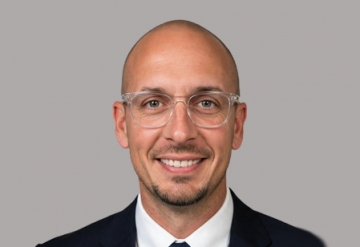
Daniel Maiden, Environmental, Health and Safety Director
Building Employee Ownership of Workplace Safety

Daniel Maiden
Workplace safety is often measured by what can be documented: completed inspections, training records, written procedures, corrective actions and incident rates. These tools provide structure, accountability and a way to identify whether an organization is meeting its responsibilities.
But a checklist, by itself, cannot create a safe workplace.
The real measure of a safety culture is what employees do when no one is watching.
For safety professionals and leaders, the challenge is to move beyond compliance and build something more powerful: employee ownership. When workers believe safety belongs to them—not just the safety department, supervisor or management team—they become active participants in identifying hazards, preventing incidents and improving the way work gets done. That transformation begins with trust.
Make Safety Personal
Employees are more likely to take ownership of safety when they understand why it matters. Rules and procedures tell people what to do, but leaders must also connect those expectations to something personal.
Every employee wants to go home safely at the end of the day. Every employee has people who depend on them. Safety becomes more meaningful when it is presented not simply as an organizational requirement, but as a shared commitment to protecting one another.
At Lyndon Steel, where I serve as an EHS leader, our experience has reinforced the importance of making safety a common value. In 2024, our North Carolina operations reported more than 5.8 million hours worked without a losttime accident, along with recognition from the North Carolina Department of Labor for sustained safety performance. Those results were not created by a safety department working alone. They reflected the daily decisions of employees throughout the organization.
Give Employees a Voice
Ownership grows when employees know their observations matter.
Frontline workers often see hazards long before they appear on an inspection report. They know which tasks are difficult, which equipment creates recurring problems and which procedures may look good on paper but become challenging in real-world conditions.
Leaders should seek that knowledge.
Ask employees what concerns them. Invite suggestions during meetings. Encourage near-miss reporting. Walk the floor and listen, not simply to inspect, but to understand. Most importantly, respond when employees raise concerns.
“The strongest safety cultures are built when employees stop thinking of safety as something being done to them or for them and start thinking of it as something they actively create.”
Nothing undermines participation faster than asking for feedback and then doing nothing with it.
When an employee identifies a hazard and sees the organization act, that employee learns an important lesson: speaking up makes a difference. Others notice, and participation grows.
Lead by Example
Employees pay close attention to what leaders do, especially when production pressures increase.
If a supervisor tells employees to follow a procedure but routinely ignores it, the message is clear. If management rushes through a safety meeting or treats protective equipment as optional when deadlines approach, employees learn that safety is secondary.
Leadership means demonstrating that safety expectations apply to everyone.
That includes senior executives, supervisors, experienced employees and new hires. A strong safety culture does not depend on a person's title.
My approach has always been that there are a right way and a wrong way to address safety issues. Attacking or disrespecting an employee for violating a rule rarely creates lasting behavioral change. Positive reinforcement, respectful coaching and consistent expectations are more effective ways to build trust and encourage people to repeat safe behaviors.
Recognize the Right Behaviors
Traditional safety programs can unintentionally focus too heavily on what went wrong. Someone breaks a rule, a corrective action is issued and everyone moves on to the next problem.
But what about what went right?
When an employee stops a job because something does not look safe, reports a near miss, helps a coworker identify a hazard or finds a better way to perform a task safely, those behaviors deserve recognition.
Recognition does not have to mean a major reward. Sometimes a sincere thank-you from a supervisor is enough.
The goal is to reinforce the idea that safety leadership happens at every level of the organization.
Move from Rules to Relationships
Policies establish expectations, but relationships determine whether people believe those expectations.
Employees need to trust that they can report a concern without being embarrassed, ignored or automatically blamed. Supervisors need to trust employees to make responsible decisions. Safety professionals need to build credibility with operations by helping solve problems rather than simply identifying them.
This is particularly important in complex organizations where different facilities, teams and operational environments may face different risks. A consistent safety foundation is important, but effective programs also need to recognize the realities of the people doing the work. My experience across multiple facilities has reinforced that standardization should create common expectations without eliminating the local knowledge needed to manage specific risks.
Make Ownership the Goal
The ultimate goal of workplace safety should not be to create employees who follow rules only because someone is watching.
It should be to create employees who recognize hazards, speak up, look out for one another and make safe decisions because they understand the value of doing so.
That requires patience. Culture does not change because a new policy is posted on a wall or a training module is completed. It changes through thousands of everyday interactions, how a supervisor responds to a question, how management handles a near miss, how an employee is recognized for doing the right thing and how consistently leaders demonstrate that safety matters.
The checklist still has its place. Audits, inspections, training and compliance requirements remain fundamental components of an effective EHS program.
But they are the foundation, not the destination.
The strongest safety cultures are built when employees stop thinking of safety as something being done to them or for them and start thinking of it as something they actively create.
When that happens, safety moves beyond the checklist. It becomes part of who an organization is.
The articles from these contributors are based on their personal expertise and viewpoints, and do not necessarily reflect the opinions of their employers or affiliated organizations.
Top
