
THANK YOU FOR SUBSCRIBING
× 
Construction Tech Review Weekly Brief
Be first to read the latest tech news, Industry Leader's Insights, and CIO interviews of medium and large enterprises exclusively from Construction Tech Review

Bird Infrastructure
Andy Wasiuk, CD, Construction Manager
Leading Complex Construction Projects through Integration
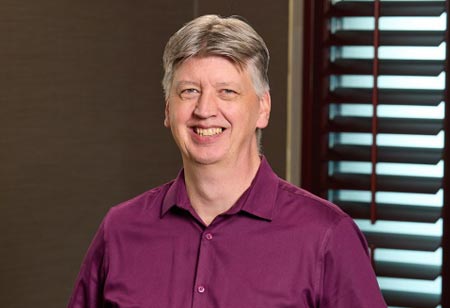
Andy Wasiuk
A vaccine manufacturing plant, a critical care hospital with a helipad, Tier IV data centers, a maximum-security forensic facility and an international airport are all examples of construction projects with unique complexities. Each is, in many respects, a masterpiece as one-of-a-kind undertaking, carefully crafted to meet a specific purpose. While these facilities differ significantly in function, construction professionals know they share a common reality: the building envelope has selections of known elements that come with its own set of challenges related to the shell for ‘building the box. 'The exponential level of complexity lies in what goes inside them for ‘filling the box.'
Civil, Structural and Architectural (CSA) work is largely based on established methods, materials and standards. However, the increasing sophistication of integrating Mechanical and Electrical (M&E) systems, coupled with the rapid evolutions and revolutions of Information, Communication, Automation and Technology (ICAT) systems, has transformed how mission-critical facilities are designed, built and commissioned.
CSA, M&E and ICAT each represent highly specialized disciplines supported by extensive engineering requirements and validation processes. Successfully delivering a mission-critical facility depends on integrating these disciplines into a focused, coordinated effort. This creates one of leadership's greatest challenges: bridging the knowledge gaps that naturally exist between specialist groups.
Experts within CSA often have limited understanding of the numerous challenges faced by M&E or ICAT teams and the reverse is equally true. Yet decisions made within one discipline routinely affect the others. Successful leaders recognize that project success depends on fostering an appreciation of these interdependencies. Leaders within CSA must develop a working understanding of M&E and ICAT requirements, while M&E and ICAT leaders must understand the constraints and challenges associated with CSA work. Without this shared perspective, coordination suffers and project risk increases. In this regard, the common activities of early works, underground and duct bank tasks require the civil lead to look down the schedule process and engage the M&E/ICAT leads. An equal action should also rest within M&E/ICAT to realize that early tasks need clarity for grounding, vaults, routing and placement within hard/soft scapes exterior from the property line to the building perimeter. Easier said than done and nearly impossible to anticipate unless experiences lead to hard lessons learned.
“A key concept to execute is to take the complexity and simplify it as much as possible, but not simpler.”
A key concept to execute is to take the complexity and simplify it as much as possible, but not simpler—as dumbing down a difficult topic too much creates its own follies. In other words, finding the lowest common denominator. For example, electronic specialty systems are rarely singularities, as they are modular by design. Life safety systems, building automation systems (BAS), integrated electronic security, real-time location services (RTLS), or other IoT-based technologies are all systems that can be broken down into manageable and repeatable components tied to individual TeleCom Rooms.
A common error is waiting until the facility is nearly complete before beginning system testing. Effective leaders take an assertive approach. The objective is to identify a practical unit of completion, prove it works and then replicate the process across the project.
Consider a typical example. An IT room may support approximately 10,000 square feet (930 m²) of floor area. That same area will include an air handling unit, fire-rated walls, doors and fire-smoke dampers; a fire alarm data gathering panel; sprinkler zone controls; access control systems; video surveillance; wireless access points; and, in health sciences, systems such as nurse call and RTLS. The HVAC system may also include variable air volume (VAV), perimeter radiation and other BAS-controlled devices.
Whether the facility is 100,000 or 1,000,000 square feet, it is ultimately composed of multiple repeatable zones containing the same blend of CSA, M&E and ICAT components. Most specialty electronic systems rely on local nodes located within nearby IT or electrical rooms before integrating into larger facility-wide systems.
The lesson is straightforward: do not wait for the final square foot of construction to be completed before testing the first available area. Commissioning should begin as soon as a functional module is ready—and this requires advanced planning with scheduled tasks identifying predecessors and successors. Early testing identifies issues sooner, reduces risk and creates proven templates that can be replicated throughout the remainder of the project.
The key takeaway for senior leaders is that success requires technical and organizational integration. Leaders must actively manage their teams to understand other disciplines, communicate their own priorities clearly and collaborate across traditional boundaries. This is not a one-time exercise but a skill refined over multiple project cycles.
Despite extensive industry knowledge and proven methodologies, major projects still miss critical milestones and fail to achieve their intended outcomes. These failures stem from leadership's inability to apply lessons that are already well known. The recipe for success exists. What is required is the discipline to follow it, the humility to learn from others and the commitment to execute consistently.
The articles from these contributors are based on their personal expertise and viewpoints, and do not necessarily reflect the opinions of their employers or affiliated organizations.
Top
